
waypoint-behavioral-health-solutions
  • Home
  • Programs
    • Center-Based Therapy
      • Center-Based Services
    • School-Based Learning
      • Learning Academy Services
    • Home-Based Therapy
      • In-Home Services
      • In-Home Service Area
    • Behavioral Activation
      • About Behavioral Activation
      • Roadmap to Progress with Behavioral Activation
      • Treating Anxiety and Depression
  • About Waypoint
    • Why Waypoint
    • Our Story
    • Our Philosophy of Care
    • Blog
  • How We Work
    • Our Approach
    • Why Waypoint
  • Contact
  • Careers

May 10, 2019 by bluesteeleadmin

Now Enrolling PASSPORT Preschool Readiness Classroom

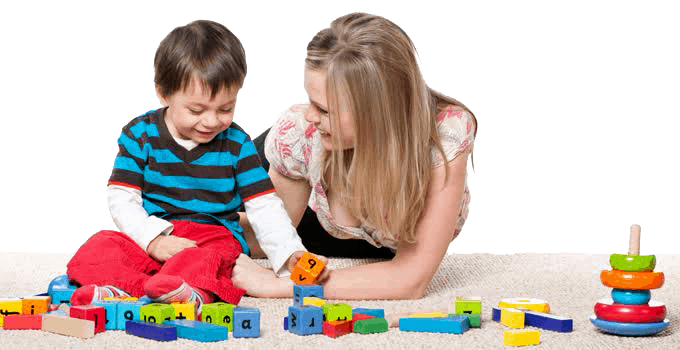
One of the most significant factors that delays the transition of children with ASD to a typical school environment is a deficit in group learning and social skills. Children with ASD need opportunities to practice these skills in an environment that looks like a typical preschool program with the support of professionals who can teach them group and social skills in a way that will stick. Our PLS Classroom is a bridge between 1:1 therapy and a typical group learning setting and can be the key to success for elementary school and beyond.

Features of the Classroom

  • 1:3 STUDENT/TEACHER RATIO
    CLASSROOM FACILITATED BY CERTIFIED TEACHERS
    BEHAVIORAL SKILLS TRAINING AND ABA BASED LEARNING ENVIRONMENT
  • DESIGNED FOR CHILDREN WITH AUTISM, ADHD AND OTHER BEHAVIORAL NEEDS
  • EMPIRICALLY BASED CURRICULUM CREATED TO FOCUS ON SKILLS THAT RESEARCH SHOWS ARE THE MOST BENEFICIAL IN GROUP LEARNING SETTINGS

Skills Practiced

  • GROUP ATTENDING AND RESPONDING
    CLASSROOM ROUTINES
  • TAKING TURNS AND WAITING
  • WORKING INDEPENDENTLY
  • SELF-ADVOCACY
  • EMOTIONAL REGULATION
  • SHIFTING FOCUS
  • RESPONSE INHIBITION
  • SOCIAL RESPONDING
  • PRO-SOCIAL SKILLS
  • EXECUTIVE FUNCTIONING
  • INITIATING TASKS
  • SELF-MONITORING
  • MAKING AND KEEPING FRIENDS

Filed Under: News & Events

May 3, 2019 by bluesteeleadmin

Grand Opening-Keller Center!!

Come Explore our New Center in Keller!

Filed Under: News & Events

August 26, 2016 by wpointadmin

Ordinary Miracles-The Gift of Special Needs Parenting

Balloon

From the instant panic that crawled into a pit of cold nausea in my stomach you would think I was holding a writ of execution rather than an innocuous birthday party invitation. Of course, taking a child with autism to a birthday party always comes with some level of drama, so maybe the nausea is warranted.   As I begin to mentally replay the parties of the past-parties that always ended in meltdown-I see a minefield disguised by balloons, ponies, and party games.

Each segment of the party has the potential to end in total disaster. A single balloon pop could send my son cowering under the table for an hour. A game of musical chairs could get really ugly when the pain of too much touching turns into tipping over all the chairs. God forbid that there are clowns, because we won’t even be able to get out of the car. Even just the talking, laughing, and rustling of opening the presents might be too much to handle.  If, by some miracle, we grit our way through all of those pitfalls, there is always the Birthday Song. The Birthday Song has always been the defeating blow for my son. Before the final Happy Birthday to Yooooouuuu can ring out, he is running away with tears and screams.

Steeling myself for whatever comes, we drive to another birthday party. I paint on a plastic smile to counterbalance the pit of nausea, and marvel that motherhood produces a love so powerful that we are willing to masochistically put ourselves in the line of fire for the sake of our children. The first hour of the party passes without incident. There are no personal space invading party games, all the balloons stay inflated, and, praise to the party gods, there are no clowns. It’s almost a victory, but like the tell-tale heart, the hour of the dreaded Birthday Song is approaching.

The birthday mom summons all the kids to the table for the cake, and they assemble all giggles and excitement. As the cake appears, I take my position just behind my son and prepare for the singing to begin.  As he is getting older and beginning to be embarrassed by his struggles, I just place my hand on his leg as a sign that I am there and ready to help him. Never taking his eyes off the approaching cake, he places his hand on top of mine and assuredly pushes it away, as if to silently say “I’ve got this, mom.” With a glint in his eye, he belts out the words to the song all the way to the very last Happy Birthday to Yoooouuuu.  As he sings, I swear, the heavens open up and a crowd of angels join in the chorus.

Wanting to drink in the beauty of the moment, I look around and notice the disconnect from all of the other parents. Some are mindless chatting, some are checking their phones, some are mouthing the words, but their minds are clearly elsewhere. I have always envied this checked out luxury that the parents of neurotypical kids are afforded. There is never a moment when I am able to check out, a fact I sometimes resent, if I am honest.  In this moment of angelic singing-a moment of extraordinary triumph-I suddenly see the gift of the constant attention. I feel as though I have been given a sacred window into the miracle of the ordinary, a view that only a lucky few are ever able to see.

Before the frozen moment of victory is interrupted by the regularly scheduled birthday party festivities, my son locks proud eyes with me and we share a private understanding. This moment that was so mundane for others was anything but ordinary for us.  Joining in the laughter and festivity, he turns back to the party and enjoys his very first piece of birthday cake that didn’t follow tears and panic.  Left alone to soak in the magnitude of that moment, I notice the pit of nausea has been replaced with a soaring spirit that can hardly be contained and decide that Happy Birthday to You is my new favorite song.


Filed Under: Uncategorized

June 14, 2016 by wpointadmin

What to Look for in an ABA Program

home-image V1

The ABCs of ABA: What to Look for in an ABA Program

Applied Behavior Analysis is known to be an exact science that uses proven techniques and principles to be effective, but this does not mean that all ABA programs will be identical or created equal. There are a wide range of services and methods of delivering those services that range from clinic to clinic and practitioner to practitioner. Parents should identify some key components of an effective behavior change program and educate themselves as to the techniques and methods most commonly used in ABA therapy.

Components of a Good ABA Program

  1. Your program should be designed and overseen by a qualified professional. Typically, the professional overseeing the behavior change program will have earned a certificate that identifies them as a Board Certified Behavior Analyst (BCBA). This certification, though not required, indicates that the practitioner has completed a quality standard of education and training.
  2. Your program should be individually designed and begin with detailed assessment. One of the hallmarks of ABA therapy that sets it apart from other treatments is that each client is treated for their specific needs based on an extensive assessment to identify the behavior changes that need to be made.
  3. Your program should have meaningful and precisely defined goals. The individualized program created for your child should contain goals that will make a positive impact on your child and your family and they should be goals that you agree are meaningful. Additionally, any behavior goals should be clearly defined, so that they can be measured objectively and changes can be tracked.
  4. Your program should have consistent measurement to track progress. Data should be collected each and every time your child is in a session. That data will be used by the behavior analyst to track progress and make changes to the program, if needed. This data should be available for review by the parents at regular intervals, so that they can be aware of progress and make requests for program changes.
  5. Your program should be consistent. Therapy should be offered on a regular basis to ensure consistent improvement. Parents should also expect that techniques will be applied consistently each time their child is in the clinic and across practitioners.
  6. Your program should use a variety of techniques and offer multiple opportunities for learning. ABA offers a standard set of principles in which many different techniques can be applied for learning. Parents should expect that practitioners will use many different techniques and that each session will include creative and carefully planned programs that will give your child the best chance at maximal learning.

Filed Under: Uncategorized

May 27, 2016 by wpointadmin

The ABCs of ABA: What is ABA?

The ABCs of ABA

Applied Behavior Analysis or ABA therapy is something that parents often hear for the first time when they begin the diagnosis process for autism. There are many misunderstandings and questions surrounding ABA, particularly for parents who have just received a diagnosis and are searching for the best possible therapy for their child. We’re here to help you understand the basics components, philosophy and most importantly, the benefits, of ABA therapy.

What is ABA?

ABA therapy applies our understanding of how behavior works  in real-life situations. The goal is to increase behaviors that are helpful and decrease behaviors that are harmful or affect learning.

In simplest terms, ABA uses proven techniques to work with your child on changing or modifying behaviors that are important to you. These techniques are used in a way that is logical and objective, so we can be sure we are doing a good job.

One of the things that sets ABA therapy apart from many of the other therapy options out there is that it’s scientifically driven. Therapists use data collection to evaluate and then create a customized treatment plan for your child that includes measurable goals. Data is then collected during every session to measure progress. Treatment plans are regulated updated, based on this data collection.

ABA therapy programs can help with a wide variety of things, including:

  • Language and communication skills
  • Attention, focus, social skills, memory, and academics
  • Decreasing problem behaviors

How does ABA therapy work?

Applied Behavior Analysis involves many techniques for understanding and changing behavior. ABA is a flexible treatment that can:

  • Be adapted to meet the needs of each unique person
  • Provided in many different locations – at home, in a clinic setting, and in the community
  • Teaches skills that are useful in everyday life
  • Can involve one-to-one teaching or group instruction

The ABA philosophy

Positive reinforcement is one of the main strategies used in ABA.

When a behavior is followed by something that is valued (a reward), a person is more likely to repeat that behavior. Over time, this encourages positive behavior change.

First, the therapist identifies a goal behavior. Each time the person uses the behavior or skill successfully, they get a reward. The reward is meaningful to the individual – examples include praise, a toy or book, watching a video, access to playground or other location, and more.

Positive rewards encourage the person to continue using the skill. Over time this leads to meaningful behavior change.

While this is the therapy that’s considered the “gold standard” for children with autism, it’s proven to be effective with children with ADHD, oppositional defiant disorder or other behavioral challenges.

And, when you consider that the basic principle of ABA is rewarding good behaviors to extinguish bad behaviors, it’s a concept that can be applied to any child, neurotypical or not.

Filed Under: Uncategorized

  • « Previous Page
  • 1
  • 2
  • 3

  • In Clinic
  • In Home
  • Learning Academy
  • Behavioral Activation

© 2019 Waypoint. All Rights Reserved.